

How To Set Up Zero Two Bot
This commodity covers setting upwards a Raspberry Pi Goose egg 2 W for headless SSH access over WiFi using a Mac or Windows x.
These instructions or for the 32-bit operating system. Instructions for setting upward a Pi Zippo two W with a 64-chip operating organization tin be found here: Headless Raspberry Pi Zero 2 W SSH WiFi Setup (64-bit, Mac + Windows, 12 Steps)
Instructions for a Raspberry Pi iv can exist institute here: Headless Raspberry Pi 4 SSH WiFi Setup (Mac + Windows).
Pace 1. Download Raspberry Pi OS Bullseye low-cal
These instructions are for a Raspberry Pi Os Bullseye prototype that I downloaded from here:
https://www.raspberrypi.org/software/operating-systems/
I'm using the calorie-free paradigm (no desktop) kernel version five.ten from October 30, 2022.
Footstep 2. Burn the Raspberry Pi OS image to the SD menu
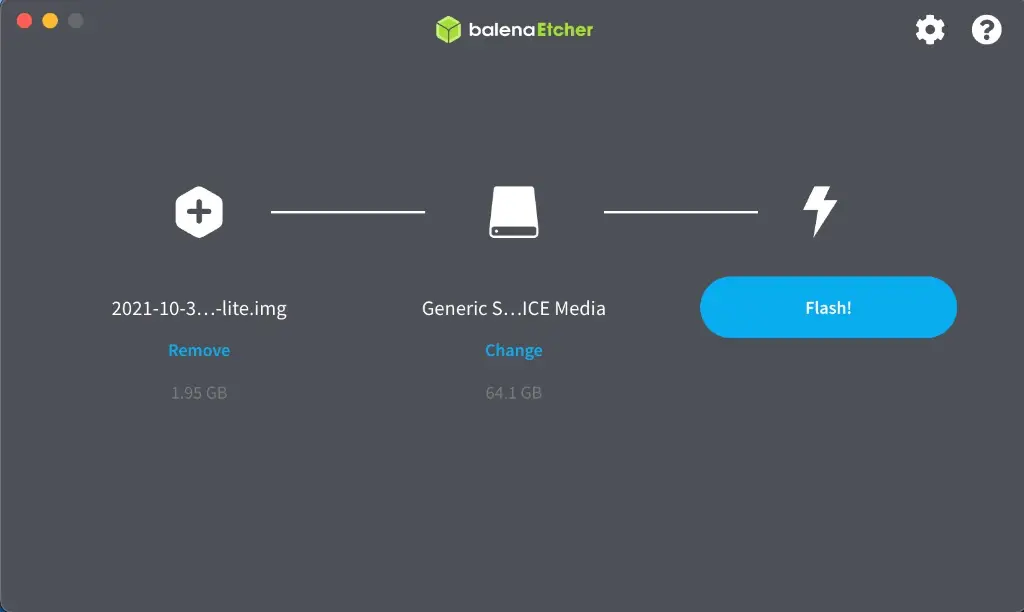
To burn an image to the SD card you lot can apply Etcher.
- Scan to
https://www.balena.io/etcher/ - Download the version for your operating system
- Run the installer
To run Etcher put a bare mini SD card and adapter into your machine. No need to format it. You can apply a new SD card right out of the package.
- Click Flash from file - browse to the zip file you downloaded for Raspberry Pi OS
- Click Select target - it may observe the SDHC Card automatically, if not select information technology
- Click Flash! - y'all may exist prompted for your password
After you flash (burn down) the image, Finder (Mac) or File Explorer (Windows) may have trouble seeing it. A simple fix is to pull the SD card out then plug it back in. On a Mac information technology should appear on the desktop with the name kick. On Windows it should appear in File Explorer with the name kicking followed past a drive letter of the alphabet.
Step 3. Enable ssh to allow remote login
For security reasons, ssh is no longer enabled by default. To enable it y'all demand to place an empty file named ssh (no extension) in the root of the boot disk.
Mac instructions (enable ssh)
Open upward a terminal window and run this command:
bear upon /Volumes/boot/ssh Windows instructions (ssh)
- Run Notepad
- In a new file put in one space and nothing more
- Click File / Salvage As ...
- Be sure to set Salvage as type to All Files (so the file is NOT saved with a .txt extension)
- Call the file ssh and salvage information technology
- Close the file
If yous are comfortable with the Windows control line you could try this instead (untested!):
- Open upward a command line
- Switch to the drive and root where boot is located:
- Type:
type NUL >> ssh - Verify that file ssh was created
Pace 4. Add together your WiFi network info
Create a file in the root of boot chosen: wpa_supplicant.conf (instructions below). Then paste the following into information technology (adjusting for your ISO 3166 alpha-ii country code, network name and network password):
country=U.s.a. ctrl_interface=DIR=/var/run/wpa_supplicant Group=netdev update_config=1 network={ ssid="NETWORK-NAME" psk="NETWORK-PASSWORD" } Mac instructions (wifi settings)
Create a new empty file that will hold network info:
bear upon /Volumes/boot/wpa_supplicant.conf Edit the file that you merely created and paste the text above into information technology (adjusting for the proper name of your state code, network name and network password):
Windows instructions (wifi settings)
- Run Notepad
- Paste in the contents above (adjusting for the name of your country lawmaking, network proper name and network password)
- Click File / Relieve Every bit ...
- Be sure to prepare Save as type to All Files (and then the file is NOT saved with a .txt extension)
- Telephone call the file
wpa_supplicant.confand save it - Close the file
Pace 5. Eject the micro SD bill of fare
- Correct-click on boot (on your desktop or File Explorer) and select the Eject option
- This is a "logical" eject - pregnant information technology closes files and preps the SD card for removal - you even so take to pull the carte du jour out yourself
Stride vi. Kicking the Raspberry Pi from the micro SD carte
- Remove the mini-SD card from the adapter and plug information technology into the Raspberry Pi
- Pi Nil Due west ii: Plug a micro-USB power supply cable into the power port
- Give the Pi enough of time to boot up (it can take as much as ninety seconds -- or more)
Step 7. Login remotely over WiFi
This function assumes that ssh is enabled for your image and that the default user is pi with a password of raspberry.
NOTE: Your car must exist on the same WiFi network that you configured the Pi for.
Mac instructions (login over wifi)
- Open a terminal window
- Run the following commands:
ssh-keygen -R raspberrypi.local ssh pi@raspberrypi.local - Don't worry if you get a host non found mistake for the first control - the idea is to clear out any previous references to raspberrypi.local
- If the pi won't respond, press Ctrl-C and try the last command once again
- If prompted with a warning just hit enter to have the default (Yes)
- Blazon in the password -- past default this is raspberry
Windows instructions (login over wifi)
Install Bonjour
You tin can find Raspberry Pi'south on your network using their hostname followed past .local (example: raspberrypi.local). But to do that in Windows y'all have to install the Bonjour service first.
If you have iTunes installed on Windows y'all probably don't have to exercise this. But if yous don't, browse to:
Download Bonjour Print Services for Windows v2.0.ii
and run the installer.
Install Putty
If you lot already accept Putty installed, skip to the next section.
- Scan to:
https://world wide web.putty.org - Download the 64-flake MSI (Windows Installer)
- Open it to run the installer (if asked for permission, click Yes)
- Select: Add shortcut to PuTTY on the Desktop
Login over WiFi using Putty
This part assumes that ssh is enabled for your image and that the default user is pi with a password of raspberry.
- Launch Putty
- Set the Host Name (or IP address) field to raspberrypi.local
- By default the Port should be set to 22 and Connectedness type should be set to SSH
- Click Open
- If you see a Security Alert select Aye
- A new terminal window should appear prompting you lot for a user name
- The default user name is: pi
- The default countersign is: raspberry
Pace 8. Modify your hostname and password
Congratulations! You lot can now access your Raspberry Pi over wifi!
If y'all tin't connect, see the troubleshooting section about the end of this article. Y'all may need to make some adjustments for your network.
Because your pi is now on the network, you should immediately change the hostname and password.
At the Pi command line type:
sudo raspi-config Select the options for changing the hostname and password. On a new image, I would as well recommend expanding the file arrangement (now under the Advanced options). One time the changes are made, reboot.
Recall that in one case you reboot, yous volition need to employ the new hostname to login over ssh. For example, if your new hostname is mypi you would connect similar this on a Mac:
ssh pi@mypi.local On Windows you would demand to change the host proper name in Putty to mypi.local.
Step nine. Get the latest updates
Once connected over WiFi, the adjacent thing you should do is run some updates:
sudo apt-get update -y sudo apt-get upgrade -y Step 10. Keep the Pi from going to sleep
Run this command:
iwconfig Nether wlan0 you lot will come across this line:
Power Direction:on Some other way to view the power management choice is with this command line:
/sbin/iw wlan0 go power_save Which on a new organization volition probably return this:
Ability save: on You tin can turn that off using this line:
sudo /sbin/iw wlan0 gear up power_save off But the problem is that when y'all reboot the setting will exist lost.
And then to brand it permanent y'all need to do the post-obit:
sudo nano /etc/rc.local Above the line that says get out 0 insert the command and save the file:
/sbin/iw wlan0 ready power_save off To ostend that the setting is permanent, reboot (sudo reboot) and run iwconfig over again.
Troubleshooting
Here are some helpful commands for debugging network and wifi problems on your Pi:
- This command should listing your network in the first line for wlan0:
iwconfig - This command should show info for wlan0:
ifconfig - This command should listing your network proper name:
iwlist wlan0 browse | grep ESSID - To edit or review your wifi settings, run this command:
sudo nano /etc/wpa_supplicant/wpa_supplicant.conf - To load later editing the config file (may demand to login once again):
sudo wpa_cli -i wlan0 reconfigure - If you keep getting a message similar this when remote login:
Warning: the ECDSA host key for 'mypi.local' differs from the central for the IP address 'SOME-IP-Address' Offending primal for mypi.local in /Users/mitch/.ssh/known_hosts:54Then try this - replace mypi.local below with your host proper name:
ssh-keygen -R mypi.local
Related Articles
Here is a list of my related manufactures that you may notice interesting:
- Headless Raspberry Pi Zero 2 W SSH WiFi Setup (64-fleck, Mac + Windows, 12 Steps) - instructions for setting up the 64-bit version
- Headless Raspberry Pi 4 SSH WiFi Setup (Mac + Windows)
- Raspberry Pi iv Touchscreen Kiosk Setup
- Headless Raspberry Pi 4 External SSD Setup (Samsung T5) - my commodity on how to mount an external SSD using headless operations
- Headless Raspberry Pi 4 Lite Remote Desktop Upgrade - my article on how to upgrade a headless Raspberry Pi 4 lite image with a desktop and VNC server
- Headless Raspberry Pi iv Remote Desktop VNC Setup (Mac + Windows) - in this article I show how to setup a Raspberry Pi remote desktop from scatch
- Headless Raspberry Pi three B+ SSH WiFi Setup (Mac + Windows) - my original article written for the Raspberry Pi iii B+
- How to Run NodeJS on a Headless Raspberry Pi - my commodity on how to setup and run a NodeJS server
- Raspberry Pi Touchscreen Kiosk Setup - my commodity on how to use your Raspberry Pi to build a touchscreen kiosk
- ROS TurtleSim Beginner's Guide (Mac) - if you are here because you lot'd like to get started with robotics, check out my ROS (Robot Operating Organisation) beginner's guide
- Headless Pi Zero West Wifi Setup (Windows) - my article on how to setup a headless Pi Zero W for Windows users
- Setup Pi Aught W Headless Wifi (Mac)- if y'all are Mac user with a Raspberry Pi Cipher West, I have instructions for you lot too
- Raspberry Pi Resources Guide - checkout my resources guide for links to useful hardware
Where to buy
If you would similar to use the same hardware that I used to test this article, here are some product links:
- CanaKit Pi Zero ii Due west Starter MAX Kit - order direct from CanaKit
References
- balenaEtcher [1] - a tool that handles called-for the image to the micro SD bill of fare for you
Source: https://desertbot.io/blog/headless-raspberry-pi-zero-w-2-ssh-wifi-setup-mac-windows-10-steps
0 Response to "How To Set Up Zero Two Bot"
Post a Comment